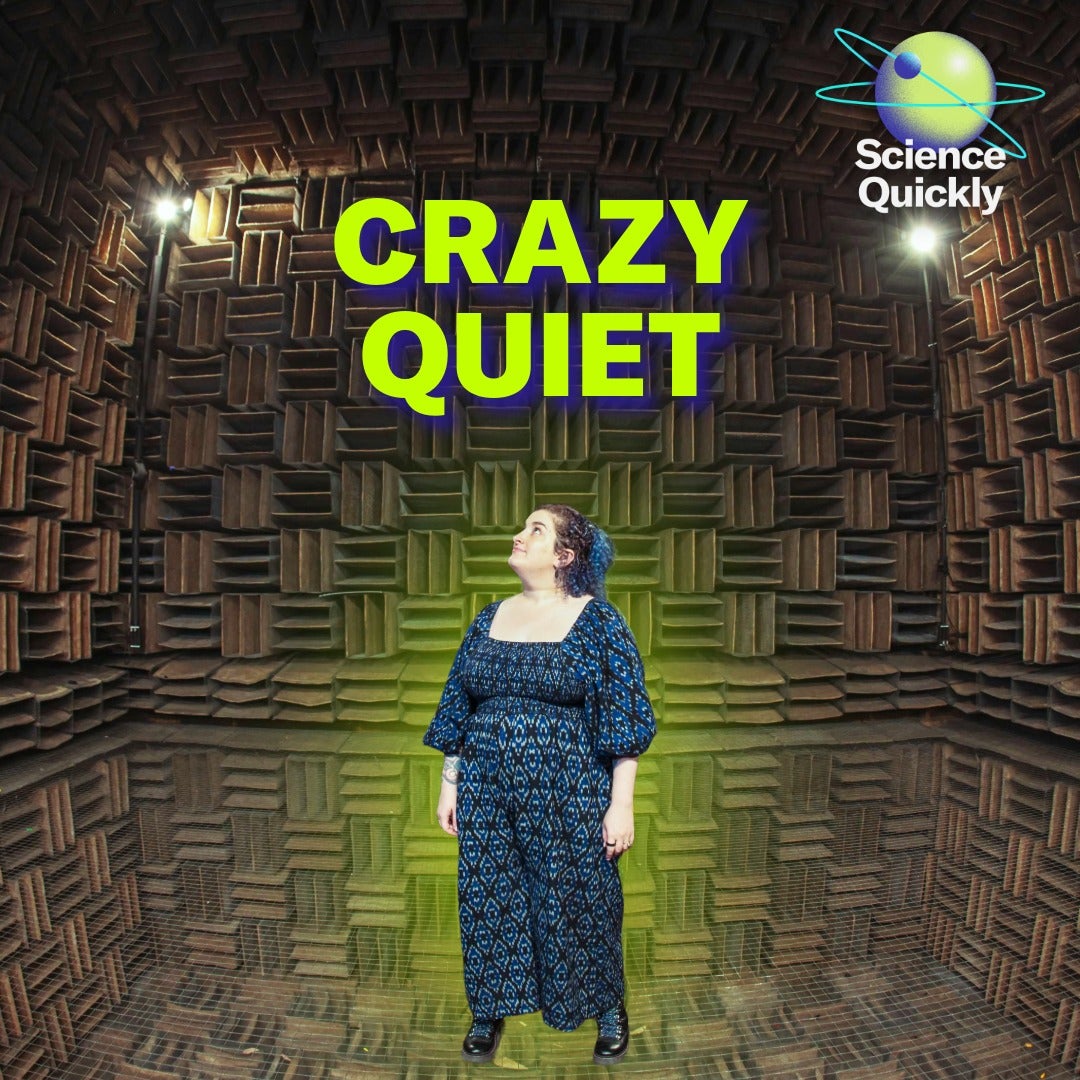
Enter One of the World’s Quietest Rooms
60-Second Science sciam.com
This is what was read here when it was published. Scientific American no longer carries it in what it publishes now.
Inside one of the quietest rooms in the world, host Rachel Feltman meets artist-in-residence Seth Cluett at the historic anechoic chamber at Bell Labs to explore the science of silence and sound perception. From popping balloons in total silence to hearing your own nervous system, we dive into psychoacoustics, audio innovation and the emotional impact of sound design. Along the way, we uncover how Bell Labs shaped everything from stereo audio to the voice of HAL in 2001: A Space Odyssey.
Science Quickly is a Signal Awards finalist! Support us by casting your vote before October 9 at the following link: https://vote.signalaward.com/PublicVoting?utm_campaign=signal4_finalists_finalistnotification_092325&utm_medium=email&utm_source=cio#/2025/shows/genre/science
More ways to use this
Open on another device

Scan to open this page. Your saved notes and account access are not included.
 EDGE Magazine #431 reviews - Grand Theft Auto VI, The Legend of Zelda: Ocarina of Time, World of Warcraft: Forever, and more
 Umamusume: Pretty Derby |OT| Horse Girls Neighing Their Way Around The World